Showing posts with label Israel. Show all posts

Wednesday, October 25, 2023

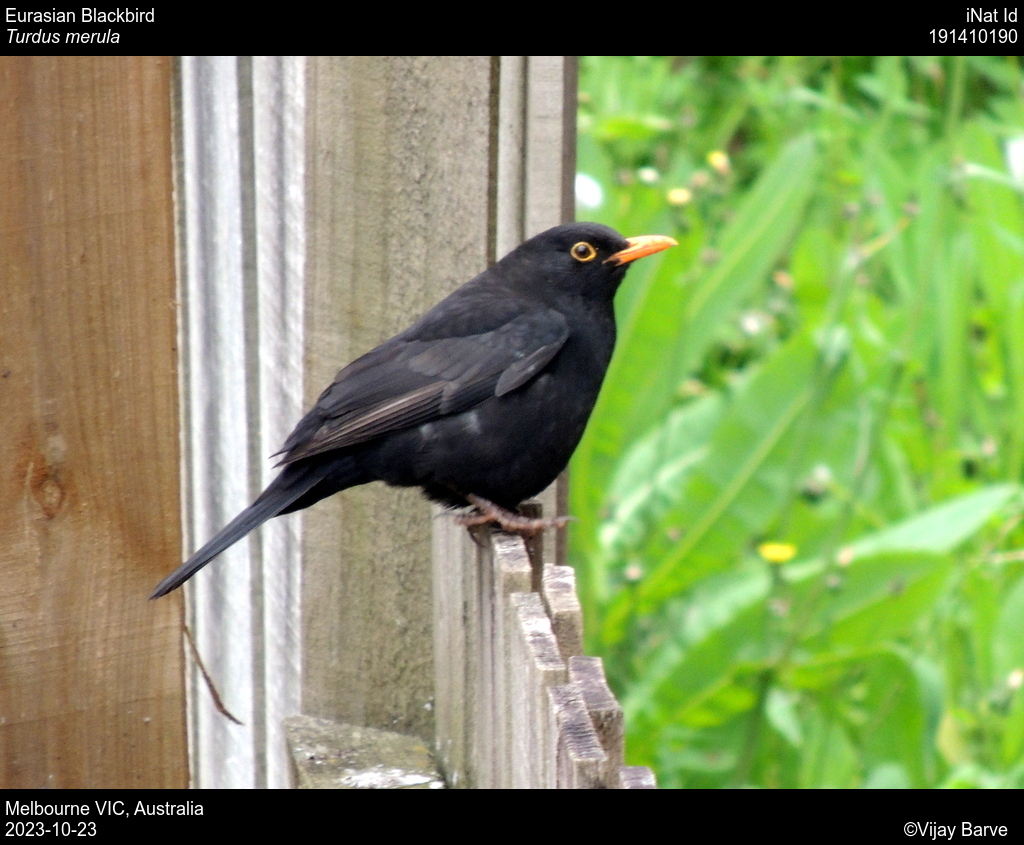
The Eurasian Blackbird (Turdus merula)


The Eurasian Blackbird (Turdus merula) also referred as Common Blackbird in Europe, a melodious songster adorned in a sleek black plumage, holds a unique place in the tapestry of Australia's avian diversity. Its presence in the land Down Under traces back to the 1800s when it was introduced to Melbourne, Victoria. From this initial introduction, the Eurasian Blackbird has embarked on an impressive expansion, successfully dispersing throughout much of southeastern Australia.


This ground-feeding bird, a common sight in gardens, parks, and open woodlands, has earned a reputation for its melodious repertoire, serenading its surroundings with a rich, flute-like song. Its diet is as diverse as its habitats, encompassing a variety of insects, earthworms, seeds, and berries. While its omnivorous nature provides sustenance, it has also led to its classification as a pest species, as it can cause damage to fruit crops.


Despite its occasional conflicts with human interests, the Eurasian Blackbird remains a captivating addition to Australia's avian landscape. Its adaptability and melodic presence have earned it a place among the country's most recognizable and well-loved birds.


In 2017, I had the privilege of encountering the Eurasian Blackbird in its native range, Israel. Amidst the vibrant greenery of the region, I was enchanted by its familiar song, a reminder of its remarkable journey across continents. The encounter served as a testament to the Eurasian Blackbird's resilience and adaptability, qualities that have facilitated its successful establishment in Australia.


The Eurasian Blackbird's presence in Australia serves as a reminder of the intricate connections that bind the natural world. Its journey across continents highlights the interconnectedness of ecosystems and the enduring impact that human actions can have on the distribution of species. While its presence has not been without challenges, the Eurasian Blackbird has undoubtedly enriched Australia's avian tapestry, adding a touch of European charm to the continent's diverse birdlife.


Thursday, October 13, 2022

Zebra Blue Butterflies (Leptotes)

Genus Leptotes in the butterfly family Licaenidae is group of species with intricate patterns on their underwings. Linnaeus encountered this genus and described as Papilio pirithous in 1767 in his Systema naturae. Later Scudder grouped two American species into genus Leptotes. Worldwide there are now about 25 species in this genus, distributed mainly in Afro-tropical and Neo-tropical regions, but the lone Indo-Australian species placement is a bit uncertain.

So far I met four species of these group. The first one is obviously the Indo-Australian species: Leptotes plinius or the Zebra Blue. This was in India, however it has a very wide distribution. I have interacted with this butterfly numerous times.   


Second species of the group that I have met is Leptotes cassius or the Cassius Blue. This species is distributed in Florida and Texas all the way down to South America. This butterfly can be seen around Plumbago or few other Fabaceae plants. 


The third species is Leptotes pirithous or the Lang's Short-tailed Blue, who I met in Haifa, Israel. When I saw both these species in Florida and Israel, I thought, "Oh the Indian species is here too," but then I found out that they are all actually different species which look very similar.


The fourth one I met recently in California. This is the Marine Blue (Leptotes marina) which is distributed more on western USA and Mexico. 


Saturday, August 12, 2017

Mallow Skipper (Carcharodus alceae)

The mallow skipper or Plain Marbled Skipper (Carcharodus alceae), is a butterfly of the skippers family (Hesperiidae).

This widespread and common species, can be found in most of southern and central Europe, in northern Africa, in the Middle East and all way to  northern India, in the Middle and Central Asia, in the western Himalayas and in the south of Western Siberia.

The scientific Latin species name alceae refers to the host plants Althaea, which, in turn, are named after the ancient Greek poet Alcaeus of Mytilene.

I met this one in Haifa, Israel.


References:

Saturday, August 5, 2017

Bosc’s Fringe-toed Lizard (Acanthodactylus boskianus)

Bosc's fringe-toed lizard (Acanthodactylus boskianus) is a species of lacertid lizard (Family Lacertidae) endemic to North Africa and Western Asia. It is a fast lizard that lives in deserts.

Both the specific name, boskianus, and the common name, Bosc's fringe-toed lizard, are in honor of French naturalist Louis Augustin Guillaume Bosc.

I met this beautiful lizard in the Negev Desert very briefly.


References:

Red-veined Dropwing (Trithemis arteriosa)

The Red-veined dropwing (Trithemis arteriosa), is a species of dragonfly in the family Libellulidae.

Trithemis arteriosa is widespread and common in most of its range which includes most of Africa and extends to western Asia and southern Europe.

This dragonfly is found in and near a wide variety of slow-flowing and still-water habitats.

This was the most common dragonfly I encountered in Israel.


Juvenile Male


References:

Saturday, July 29, 2017

Robber Flies (Family Asilidae)

Robber flies or assassin flies (Family Asilidae). They are powerfully built, bristly flies with a short, stout proboscis enclosing the sharp, sucking hypopharynx.

The name "robber flies" reflects their notoriously aggressive predatory habits; they feed mainly or exclusively on other insects and as a rule they wait in ambush and catch their prey in flight.

I have seen them in USA, Israel and in India.

#World RobberflyDay


References: