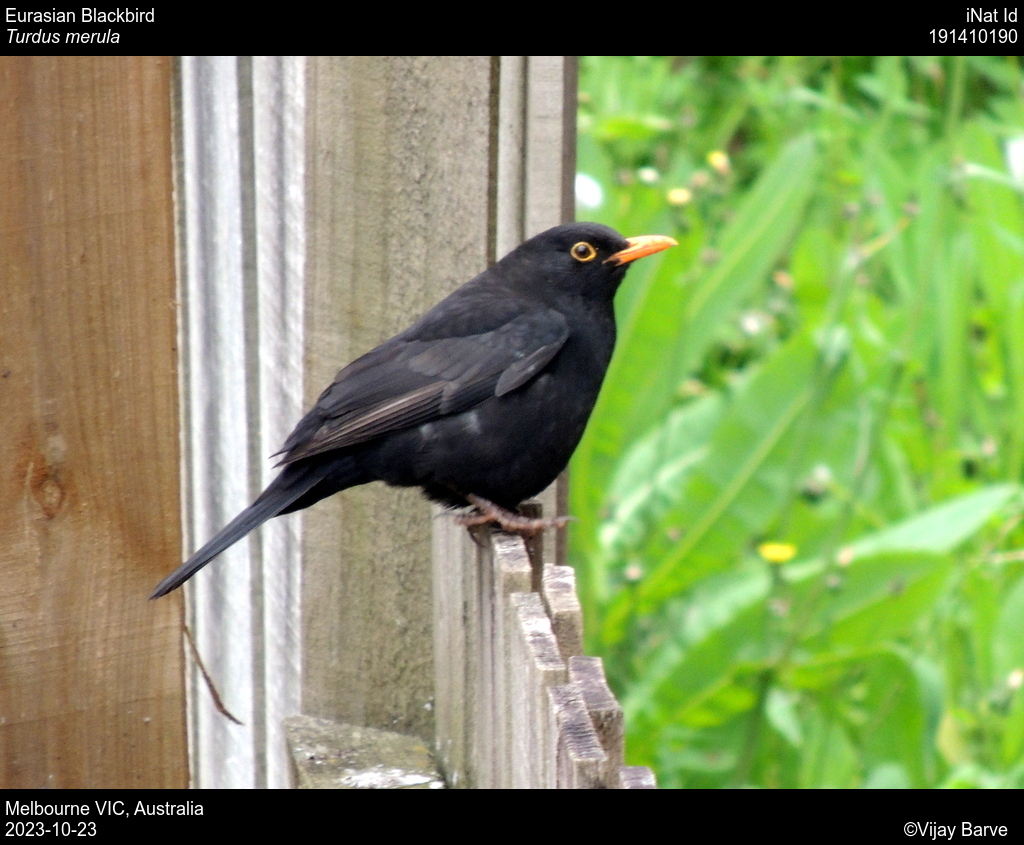
The Eurasian Blackbird (Turdus merula) also referred as Common Blackbird in Europe, a melodious songster adorned in a sleek black plumage, holds a unique place in the tapestry of Australia's avian diversity. Its presence in the land Down Under traces back to the 1800s when it was introduced to Melbourne, Victoria. From this initial introduction, the Eurasian Blackbird has embarked on an impressive expansion, successfully dispersing throughout much of southeastern Australia.

This ground-feeding bird, a common sight in gardens, parks, and open woodlands, has earned a reputation for its melodious repertoire, serenading its surroundings with a rich, flute-like song. Its diet is as diverse as its habitats, encompassing a variety of insects, earthworms, seeds, and berries. While its omnivorous nature provides sustenance, it has also led to its classification as a pest species, as it can cause damage to fruit crops.

Despite its occasional conflicts with human interests, the Eurasian Blackbird remains a captivating addition to Australia's avian landscape. Its adaptability and melodic presence have earned it a place among the country's most recognizable and well-loved birds.

In 2017, I had the privilege of encountering the Eurasian Blackbird in its native range, Israel. Amidst the vibrant greenery of the region, I was enchanted by its familiar song, a reminder of its remarkable journey across continents. The encounter served as a testament to the Eurasian Blackbird's resilience and adaptability, qualities that have facilitated its successful establishment in Australia.

The Eurasian Blackbird's presence in Australia serves as a reminder of the intricate connections that bind the natural world. Its journey across continents highlights the interconnectedness of ecosystems and the enduring impact that human actions can have on the distribution of species. While its presence has not been without challenges, the Eurasian Blackbird has undoubtedly enriched Australia's avian tapestry, adding a touch of European charm to the continent's diverse birdlife.


